Find out if your outbound will work before you pay for it.
You hire the SDR, buy the tools, and hear nothing back. A quarter and a salary later, you blame the channel. Hand it to an agency and the same quarter buys a list a cold buyer has never heard of. The Founder Engine tests what outbound depends on first, then hands you the plan to launch. Built on 10 years and 100+ founders.
For teams about to send a first campaign, and teams already sending that it is not paying for. Free, no account needed.
Readiness profile
Eight elements, scored in the order buyers experience them.
The order is fixed by dependence, not by which score is lowest. Two companies with the same low scores get the same order.
Illustrative scores for a fictional company. Bands: blocked under 50, workable 50-69, ready 70+. In place means 70 or above.
Founders buy outbound.
Almost nobody qualifies for it.
It gets bought like a channel, a tool, a rep, a retainer, when it is actually the output of everything upstream of it. Then outbound gets blamed.


I've pulled this same order of parts out of a hundred engines. The fix never changes: diagnose first.
Tools before ICP
New software. Still no idea who to target.
SDRs before message
A rep sending a message that does not land.
Agencies before proof
Outsourcing a story you cannot prove yet.
Campaigns before learning
Sending fast, learning nothing.
What worked in 2019
is what breaks you in 2026.
2019Volume was the lever
2026Volume is the liability
2019Reaching someone was hard
2026Reaching someone is free. Being believed is not.
2019Buyers checked you out after they replied
2026Buyers check you out before they reply, on every channel at once
Cold email reply rates, 2023 to 2026 (Laxis)
Average cold email reply rates fell from about 6.8% (2023) to roughly 4 to 5% (2025 to 2026), depending on how replies are counted.
Fully autonomous AI SDR reply rates, 2026 (Laxis estimate)
Autopilot sends get a fraction of what a founder-led motion gets.
Source: Laxis, State of AI SDR 2026 (vendor estimate). Every competitor sells speed. The faster you send into a broken foundation, the faster you burn the channel.
Sending tools, agencies and AI writers start at the send.
Nobody owns the decision before it.
The decision before the send
Start at the send
That is what we do: before every campaign, we tell you if it can work, build what it needs, and test it small.
The loop, not the launch.
An outbound campaign is not a launch. It is a test in the middle of a loop.
We read your site, your sequence and your numbers, score all 8 parts of your engine, and tell you where to start.
The engine drafts the ICP, the list spec, the proof lines, the sequence and the test. You confirm and sharpen. Each module tells you what is still open and what we recommend. You decide when to move on.
Rules set before you send. Success and failure defined from your own baseline, not a generic benchmark. The stop rule, the review point and the review date are all written while you are still objective.
Results come back, scores update, and the next test is proposed from what the last one proved or disproved.
A brief ends when you send it. This one keeps reading.
The test is one controlled run. What you do with the replies decides whether the second run is better than the first. The engine holds the plan, the results and the decision in one place, week after week.
- Week 0
The plan, with a stop rule already written
One segment, one list size, the titles under test, and the number that means stop. Decided before a message leaves.
- Weeks 1 to 3
You upload the replies
Paste or import what came back, including the ones that said no. Nothing is scored until enough replies exist to score.
- Same week
The engine reads them against the plan
Reply rate against your recorded baseline, which objection showed up, whether the pain signal you predicted is the one buyers used.
- Before the next send
One variable changes, not everything
The next test drops the variant that lost, keeps the list and cadence fixed, and names the single thing to change.
Not a rival to your sending tool. The layer it runs inside.
The engine decides what is worth sending. Your sending tool and AI agent handle the volume. One machine-readable brief carries the rules so your agent stays inside your evidence.
The 8 parts of every outbound motion
Eight parts, one motion. They work together, so we score them together, and the engine tells you where to start. Fixing the wrong one changes nothing.
Market Clarity
Painful enough to care now?
Market Clarity checks whether your buyer has a real problem that is painful, urgent, and connected to a business outcome. Outbound cannot create urgency from nothing.
A company can have a great list and a strong message, but if the buyer does not feel a real cost, risk, or missed opportunity, they will not respond.
You know exactly what pain exists, when it becomes painful, and what business event makes the buyer more likely to care.
The problem sounds broad, generic, or true for everyone, but urgent for no one.
Every part gets a score, and the score is backed by evidence, not opinion. The report tells you what holds, what does not, and where to start.
You do not leave with advice.
You leave with the artifacts.
Most outbound products sell you a plan and hope your business fits it. This one spends thirty minutes reading your evidence first, then builds the plan from what it found. The test is not the product. It is the reason the plan is yours.
Here is what is in the workspace when you finish. Not a summary of it. The thing itself.
A build brief a contractor could execute tomorrow: title filters, company type, size band, geography, industry, and trigger evidence in its own column. Fifteen required columns. Six QA rules to run on twenty rows before anything sends. Plus the boundary rule, written down, naming why the next company is out.
Same problem, same offer, same proof. Only the title, the pain framing and the trigger change, so the result tells you who actually feels it. Each variant carries its own stop rule, decided before you send:
0 pain-signal replies at 66 touches = kill this title
A full sequence per style your evidence can carry, written to the trust you actually have. If your recognition is unproven, proof goes in Follow-up 2 and Message 1 stays pain-led, because a cold buyer does not believe a claim from a stranger. The engine will not write a warmer message than your evidence supports.
Which channel leads, why, and the specific thing that would wreck it. On an unwarmed primary domain the plan says so before you send, not after:
Cold volume from an unwarmed or primary domain causes lasting deliverability damage.
Success and failure set from your own baseline, before the first send. The stop rule, the review point and the review date are all written while you are still objective.
One machine-readable file carrying the plan, the verdict ceiling, the proof permissions and the evidence tiers. Hand it to any AI assistant and it executes inside your rules instead of its own instincts.
Every line is labelled with where it came from, so you know what is verified and what is still a draft.
Why not just use ChatGPT or Claude?
Use them. They are good at writing. The part they cannot do is check whether your premise is true, and that is the part that decides whether the send works.
A general AI follows your premise
Ask for a sequence and you get a well written one. If your ICP or your market assumption is wrong, it writes the sequence anyway, in a confident voice, and nothing in the answer tells you the premise was the weak part.
The engine checks the premise first
Rules built from ten years, more than 100 founders and thousands of campaigns run before anything is written. When the evidence a step needs is missing, the answer is not yet, and it names the one thing that has to become true.
It stays after you send
Replies are read against your recorded baseline and the benchmarks, week after week, with the memory of every earlier test. The next test changes one variable because the last result said which one.
You can go further with an expert
The plan can be reviewed and corrected by someone who has run this with more than 100 founders. A chat window has no one behind it when the second week of replies looks wrong.
A prompt can draft your sequence. It cannot tell you the list is too broad, that your proof is not permissioned, or that the replies you got in week two mean the trigger was wrong. The engine can, and it keeps the record of why.
A verdict, an order to build in, and what your own evidence says.
Below is a real report shape, with the company redacted. Same structure you get in about 30 minutes.
None of the eight is in place yet at 70 or above, and the score multiplies all eight. Nothing scored on optimism.
A source we cannot read lowers your confidence rating. Paste the content in and the verdict gets sharper.
You don't get to pick where you start. Neither do we.
The order is fixed by dependence, not by which score is lowest. Two companies with the same low scores get the same order.
What a founder actually receives.
One company, invented for this page: a software product sold to freight brokerages. Same eight steps, same wording a paying founder gets, trimmed to one line per asset.
Operations leads at US freight brokerages with 25 to 120 trucks under management and a dispatcher role open this quarter. Filter returns 1,840 accounts, above the 400 minimum for a segment test.
Dispatcher job posts on the company careers page in the last 30 days, checked weekly. A hiring post is the moment manual load matching starts to cost them.
"Two brokerages cut dispatch time from 40 minutes to 12 on the same load volume." Customer wording, permission on file, no comparison to a named competitor.
Subject: dispatcher opening. "You posted a dispatcher role this month. Usually that means load matching has outgrown the spreadsheet, and the new hire ends up doing the same work. Is that the reason for the hire, or is it volume?"
"Saw the dispatcher posting. Are you hiring for growth or to replace someone who left? The answer changes what the first 30 days should look like."
"This is Itay, I work with freight brokerages on dispatch load. You posted a dispatcher role this month. Is that growth or backfill?" Then stop talking.
200 contacts, 3 title variants, 4 touches over 12 days, review on day 14. Stop if positive replies stay under 3 after 150 contacts, or if the hiring trigger is wrong in more than half the replies.
6 replies, 4 on topic. Two said the trigger was wrong, they hire dispatchers every quarter. The next test changes the trigger to quarterly hiring volume and holds the list and cadence fixed.
Invented company, real structure. Your packet is built from your answers and your market.

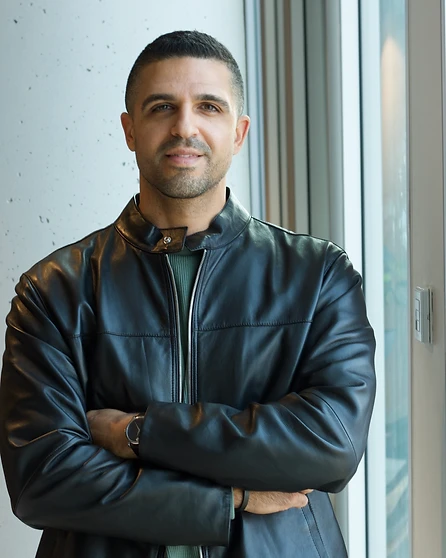
Why you can trust what
this engine tells you.
I've spent over a decade in B2B outbound. Not advising from a slide deck, but in the arena. I've worked personally with more than 100 tech founders and built thousands of campaigns, from first sends to scaled motions.
I founded SellTech and SellTech Academy, where we train SDRs. My background is in psychology, so the work was never really about tools or volume. It was about how buyers actually decide: what they need to believe, and see, before they reply to a stranger.
And the same scene kept repeating: a founder, months of spend deep (an agency retainer, a hired SDR, a tool stack), sending into the void because they spent before they were prepared or focused. The Founder Engine™ exists so the money decision comes after the readiness verdict, not before it.
“Test first. Spend second.”
The check is free. The repair is your call.
The test tells you what holds. After that the engine drafts your plan and you sharpen it, have it reviewed, or have it built with you.
Free Diagnostic
See where the engine breaks, before you spend a dollar.
- Outbound Readiness Score™
- Evidence confidence rating
- Recommended path: Build / Fix / Scale
- Your full 8-element profile
Outbound Launch Pack™
The engine drafts it. You confirm and sharpen it.
- The engine drafts, you confirm and sharpen
- ICP, trigger map and a list spec ready to build
- Proof audit, then a sequence per style your trust can carry
- A sized first test (200 recommended) with the stop rule set in advance
- Agent brief carrying your verdict ceiling and proof permissions
Expert Review
A verified expert reviews your finished Launch Pack: your ICP, your proof, your sequence and your launch readiness, with the corrections written into the plan rather than delivered as notes.
- Review of your full Launch Pack
- 90-minute expert review call
- Corrected ICP & message direction
- Proof & launch recommendations
After checkout you pick your session time with Itay.
Build with an Expert
We build it with you, until it is ready to send. Three working sessions with your verified expert, on your plan, until it is launch ready.
- Everything in Expert Review
- Final ICP, proof & sequence
- List QA + readiness gate
- Sales conversation prep
After checkout you pick your session time with Itay.
Founder Engine™ Partner Package
CustomPut the full Engine in front of your founders, from the test to the build.
A first sales hire spends the opening quarter producing this.
Outbound Launch Pack™
Standalone tools solve one piece. The Launch Pack connects everything into one complete pre-campaign outbound plan.
Hand it to a founder. Look smart.
Every founder you back runs the check before they spend your money. About 30 minutes, free, and they leave with the plan you would have given them yourself.
The real objections.
A general AI follows the premise you give it. If your ICP or market assumption is wrong, it still writes the sequence, and nothing in the answer says so. The Founder Engine checks the premise first against rules from thousands of campaigns and answers "not yet" when the evidence is missing. After you send, it reads your replies against benchmarks and remembers every earlier test. You can also put an expert in the loop who has run this with more than 100 founders.
Test before you scale.
Score the 8 things outbound needs, build what's missing, run one controlled test, and record exactly what it proved. No account needed. An optional free account saves your report.
Bring it in. I'll tell you what's open and what I recommend. You decide when to send.